Chapter 1: The "Industrial X-Ray Vision" That Breaks the Silence
In modern industrial infrastructure—from oil refinery pipelines to deep-sea cargo ships and high-pressure boilers—metal structures form the backbone of operations. Yet these metallic fortresses face relentless environmental erosion, with corrosion silently eating away at their thickness beneath protective coatings. Traditional inspection methods often required sanding away expensive protective layers, creating maintenance cycles that were both time-consuming and counterproductive by compromising coating integrity.
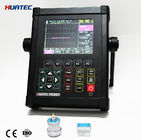
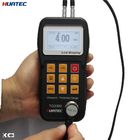
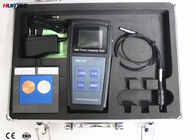
The ATG400 ultrasonic thickness gauge represents a paradigm shift in nondestructive testing (NDT), offering engineers what amounts to "industrial x-ray vision" that renders protective coatings transparent to measurement.
Chapter 2: Core Technical Architecture – A Dual-Mode Precision System
The ATG400's technological superiority stems from its sophisticated dual-mode measurement architecture that leverages advanced acoustic physics.
-
Pulse-Echo Mode (P-E): The Versatile Performer
When measuring bare metal or standard applications, the P-E mode demonstrates remarkable versatility. With a measurement range spanning from 0.65mm ultra-thin components to 600mm thick castings, the ATG400 eliminates the need for multiple specialized devices across different industrial environments.
-
Echo-Echo Mode (E-E): The Coating-Penetrating Innovation
This represents the instrument's breakthrough capability. By analyzing the time difference between ultrasonic waves reflected twice within the base metal, the E-E mode mathematically eliminates coating thickness from calculations. Whether facing epoxy, polyurethane, or composite coatings, the ATG400 automatically isolates the true metal thickness—rendering destructive coating removal obsolete.
Chapter 3: Environmental Adaptability – Precision Under Extreme Conditions
Designed for real-world industrial environments, the ATG400 maintains accuracy where conventional instruments fail:
-
Advanced Calibration: With sound velocity adjustment from 1000m/s to 9999m/s, the device accommodates everything from steel and aluminum to plastics and ceramics through either manual input or two-point calibration.
-
Dynamic Measurement: Corrosion often appears as localized pitting. The ATG400's 7Hz single-point measurement and 16Hz scan modes ensure no defect goes undetected during surface sweeps.
-
All-Weather Operation: Functioning reliably from -20°C to 60°C with 90% humidity tolerance, the instrument performs equally well in Arctic conditions and tropical environments.
Chapter 4: Intelligent Data Management – From Measurement to Decision-Making
The ATG400 transforms thickness data into actionable insights:
Its structured storage system (20 files with 99 data points each) enables systematic tracking of thickness variations across time and location, supporting predictive maintenance strategies. The device's 100-hour battery life with intelligent power management ensures uninterrupted field operations, while real-time coupling indicators prevent measurement errors.
Chapter 5: Probe Selection – A Tailored Solution Matrix
The system's modular probe design addresses diverse industrial needs:
The standard P5EE probe serves most general applications, while specialized options include the PHT5 for high-temperature environments (up to 300°C), high-frequency P07 (7MHz) for precision small-component analysis, and low-frequency P02 (2MHz) for thick or acoustically challenging materials.
Chapter 6: Conclusion – Redefining Industrial Safety Through Precision Measurement
More than just a thickness gauge, the ATG400 represents a comprehensive solution for critical industries where structural integrity impacts operational safety. By combining advanced ultrasonic technology with intelligent data handling, it empowers engineers to make informed maintenance decisions—protecting industrial assets while optimizing inspection workflows.


 आपका संदेश 20-3,000 अक्षरों के बीच होना चाहिए!