logo

Bluetooth Tech Boosts Industrial Thickness Measurement Efficiency

September 16, 2026

नवीनतम कंपनी ब्लॉग के बारे में Bluetooth Tech Boosts Industrial Thickness Measurement Efficiency

In precision manufacturing and corrosion monitoring, engineers face a persistent challenge: how to maintain extremely high measurement accuracy while ensuring efficient, closed-loop inspection processes in complex industrial environments. When measurement data remains confined to paper records or manual entry systems, human error and information silos become invisible bottlenecks that constrain production quality management. The emergence of Bluetooth wireless thickness measurement technology represents not just an upgrade in measurement tools, but a crucial piece in the digital transformation of industrial inspection.

I. Technical Analysis: Measurement Principles and Digital Connectivity

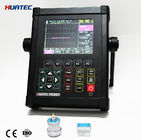
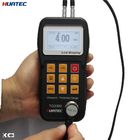
The core value of industrial Bluetooth thickness gauges lies in their seamless integration of physical measurement with digital asset management. These devices employ three primary measurement technologies:

  • Ultrasonic Measurement: Calculates material thickness by measuring the time taken for sound waves to travel through and reflect off surfaces. Widely used for wall thickness monitoring in steel, plastics, glass, and various non-ferrous metals, this method has become standard for pipeline corrosion detection.
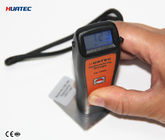
  • Magnetic Induction & Eddy Current Technology: Primarily used for coating thickness measurement, these methods precisely detect the interface between coatings and substrates through electromagnetic field variations, ensuring compliance with industrial coating standards.

The introduction of digital connectivity represents a competitive advantage. Through low-energy Bluetooth (BLE) modules, devices can instantly transmit raw data to mobile terminals or PCs. This real-time connection eliminates the data transfer delays common in traditional equipment, allowing field inspection results to be directly converted into analytical reports. This significantly reduces response times from anomaly detection to decision-making interventions.

II. Key Performance Metrics and Industrial Adaptability

When evaluating these devices, analysts should consider several critical dimensions:

  • Data Integrity and Traceability: High-performance built-in data loggers support timestamp and geolocation tagging, ensuring every measurement record is traceable and meets audit requirements of international quality management systems like ISO.
  • Environmental Robustness: Designed for harsh industrial environments, quality devices typically feature IP protection ratings, shock-resistant casings, and high-contrast displays to deliver stable data output even in conditions of intense light, high dust, or humidity.
  • Smart Calibration: Modern devices support automatic and multi-point calibration modes, using algorithms to compensate for material sound velocity differences and maintain micron-level measurement accuracy.
III. Market Landscape and Leading Solution Providers

The global industrial thickness measurement market has developed a mature competitive structure, with manufacturers specializing in different segments:

  • Comprehensive Providers: Companies like EVIDENT (formerly Olympus Scientific Division) maintain deep technical expertise in ultrasonic testing, while Elcometer and DeFelsko dominate coating measurement and surface treatment inspection.
  • Precision and Research-Oriented: ElektroPhysik and ERICHSEN focus on high-precision electromagnetic measurement solutions for laboratory and advanced manufacturing scenarios.
  • Flexible and Economic Solutions: PCE Deutschland, SAUTER, and UNI-TREND offer cost-effective Bluetooth-integrated solutions that lower the digital transformation barrier for small and medium enterprises.
  • Specialized Applications: Providers like ACS-Solutions GmbH deliver customized sensors for complex geometric inspections.
IV. Industry Value: From Data Collection to Predictive Maintenance

Bluetooth thickness gauges offer value beyond mere measurement accuracy. In pipeline corrosion monitoring, for instance, the continuous data streams transmitted via Bluetooth enable the construction of material thickness evolution curves over time. Through data modeling, companies can shift from reactive inspections to predictive maintenance—scheduling repairs before materials reach critical thresholds, thereby avoiding production losses from unexpected equipment failures. This data-driven decision-making model exemplifies the core competitive advantage in the Industry 4.0 era.

हम से संपर्क में रहें
व्यक्ति से संपर्क करें : Mr. JingAn Chen
दूरभाष : 8610 82921131,86 13261934319
फैक्स : 86-10-82916893
शेष वर्ण(20/3000)