logo

NDT Selection Magnetic Particle Vs Dye Penetrant Inspection

October 26, 2026

नवीनतम कंपनी ब्लॉग के बारे में NDT Selection Magnetic Particle Vs Dye Penetrant Inspection

Industrial quality-control teams are increasingly weighing magnetic particle inspection against penetrant testing as they seek to balance cost, speed and defect detection in structural safety programs. The two methods share a common role in nondestructive testing but differ sharply in materials, physics and the types of flaws they can reveal. Selecting the right method requires a clear understanding of component material and defect type, industry specialists say.

What sets the two methods apart

In modern industrial quality-control systems, nondestructive testing is a critical step in ensuring structural integrity and safety. Industry discussions have focused on the selection of magnetic particle inspection, or MPI, and penetrant testing, also known as dye penetrant inspection, or DPI, as companies plan equipment purchases and production processes.

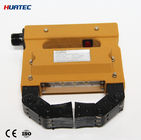
Magnetic particle inspection is limited to ferromagnetic materials. The process establishes a magnetic field in the workpiece and uses magnetic particles that accumulate at leakage fields formed by defects, allowing inspectors to identify surface and near-surface discontinuities.

Penetrant testing offers broader material compatibility and is suitable for a range of nonporous materials. Unlike magnetic particle inspection, it is designed to locate defects that are open to the surface rather than flaws beneath the surface.

Testing method Suitable materials Primary detection targets
Magnetic particle inspection (MPI/MPT) Ferromagnetic materials Surface and near-surface discontinuities
Penetrant testing (DPI/LPI) Nonporous materials including metals, plastics and ceramics Surface-breaking defects

Selection hinges on material and defect type

In production environments, the choice of testing method should focus first on workpiece material and the type of defect expected. For ferromagnetic metal components, magnetic particle inspection is often the preferred option because of its ability to detect near-surface flaws.

For nonmagnetic metals, plastics and ceramic products, penetrant testing is a low-cost and efficient industry-standard method for locating surface-opening defects. The method cannot detect internal flaws or cracks that do not extend to the surface because the penetrant cannot enter those areas.

Facilities evaluating testing equipment should consider workpiece specifications, production volume and the required detection accuracy. A comprehensive assessment should also confirm that site conditions support the method under consideration, avoiding a narrow focus on a single system while overlooking process limitations.

Frequently Asked Questions

Can magnetic particle inspection be used on nonmetal materials?
No. Magnetic particle inspection applies only to ferromagnetic materials because its principle relies on magnetic field conduction through the material. For plastics, ceramics and other nonferromagnetic materials, penetrant testing or another suitable nondestructive method should be selected.
Can penetrant testing find cracks inside a workpiece?
No. Penetrant testing can locate only defects that are open to the surface. If a defect is internal or does not extend to the surface, the penetrant cannot enter it, and the method cannot detect it.
How can a facility determine whether testing equipment meets production needs?
A facility should verify that the workpiece material meets the physical requirements of the testing technology, such as ferromagnetic properties for magnetic particle inspection. It should also confirm that detection sensitivity covers the smallest defect size specified in the process requirements and assess whether site conditions support the method.
हम से संपर्क में रहें
व्यक्ति से संपर्क करें : Mr. JingAn Chen
दूरभाष : 8610 82921131,86 13261934319
फैक्स : 86-10-82916893
शेष वर्ण(20/3000)